
Vetas Project
Historical Resources
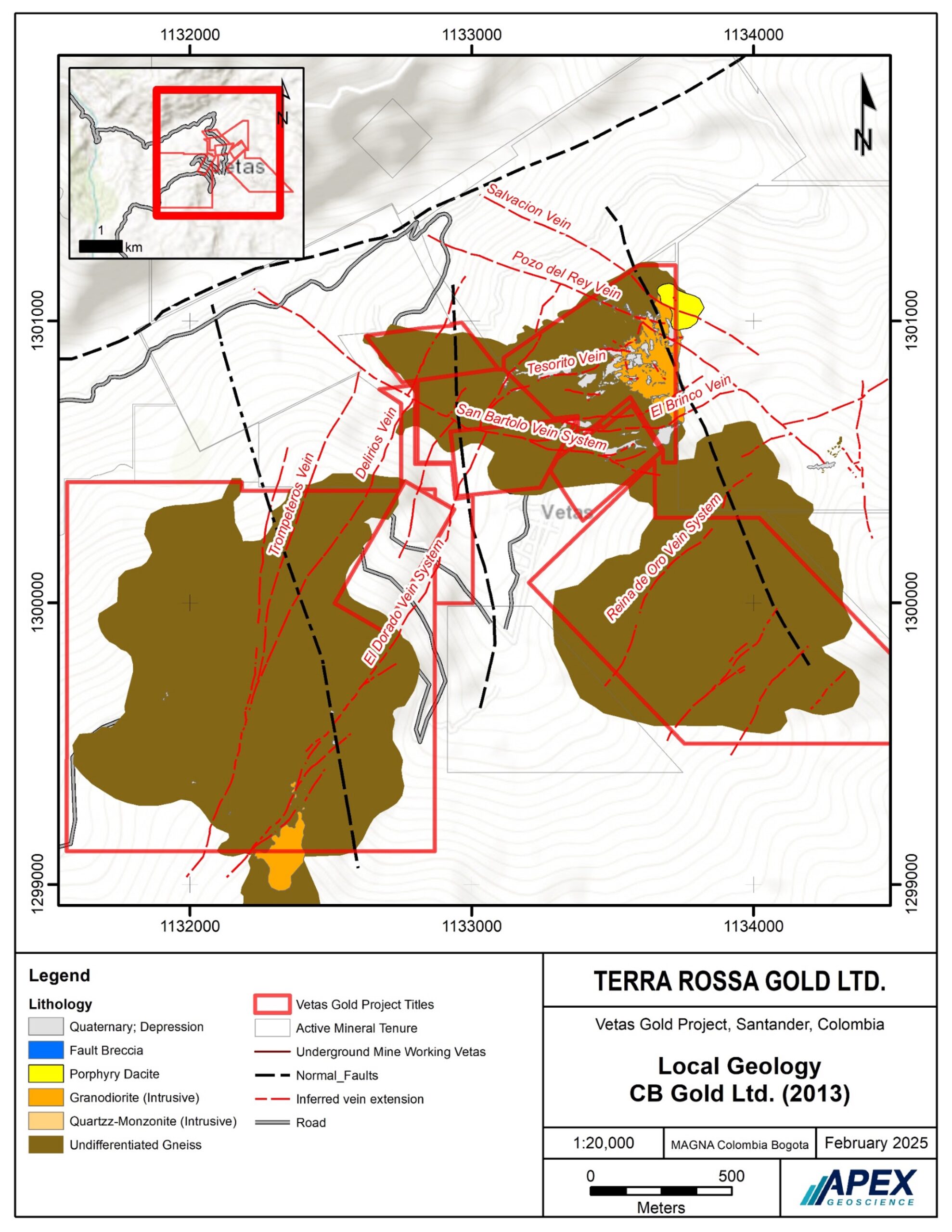
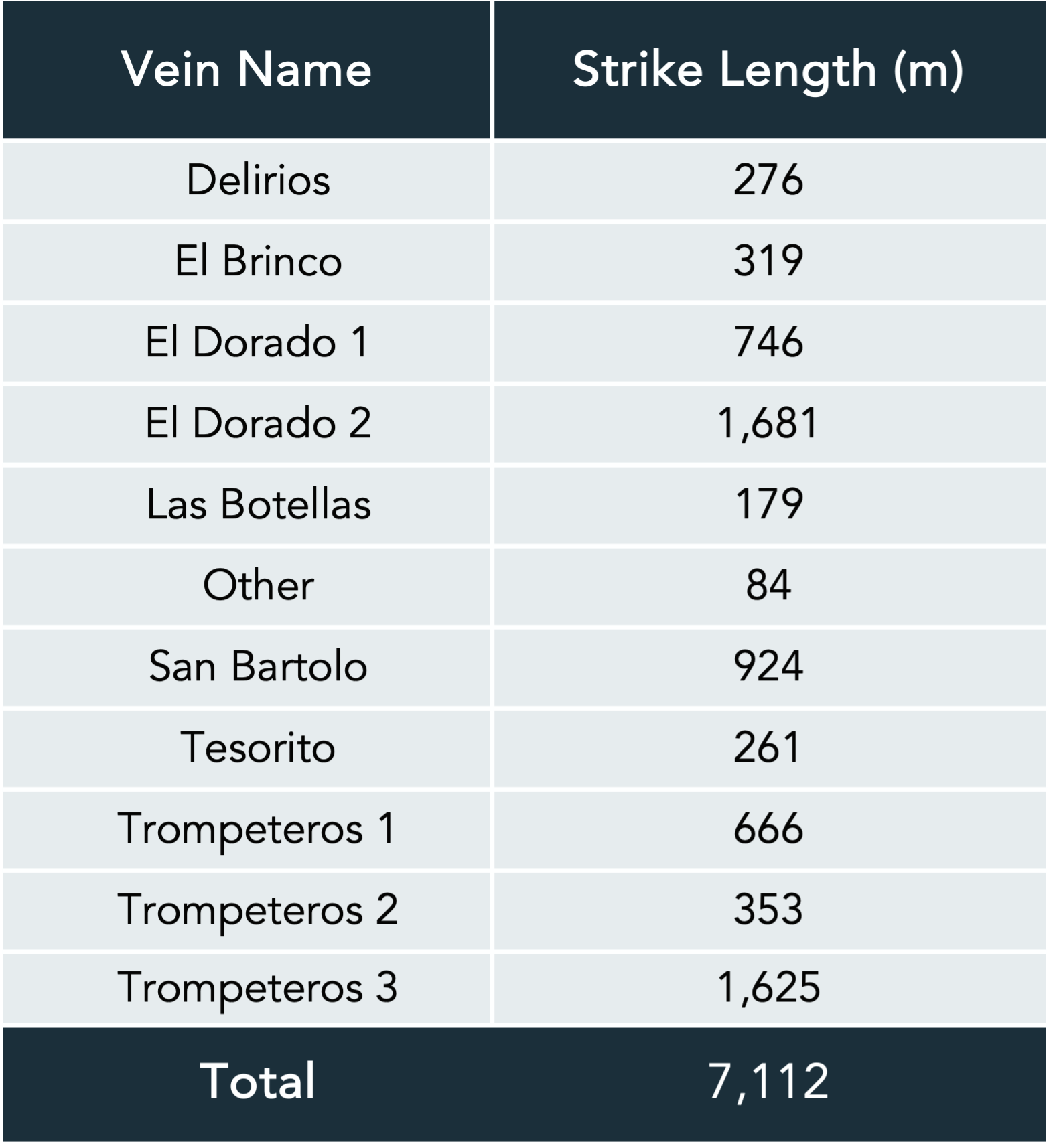
Over 7 kms mapped veins underground exposed in several underground mine workings.
Vetas Project
Historical Mineral Resource
-
Key Assumptions, Parameters, and Methods for Historical Estimate:
The surface channel sample results were verified by SRK along with the diamond drilling data. SRK considered that these samples collected by CB Gold were acquired using adequate quality control procedures that generally meet industry best practices for resource delineation.
-
Sample Results:
The sample results of the channel sampling program were used to guide the 3-D vein models in the SRK study and were used in the resource estimate (Barnett and Dishaw, 2014).
Original assays were composited to 1.5 meter lengths within the mineralized vein domains. Very high-grade assays were capped at 100 g/t Au and 200 g/t Ag. The influence of very high-grade gold and silver values was further limited by employing a search distance restriction which prevented a sample, with a value above a high-grade threshold from being used in grade estimation of distant blocks (Barnett and Dishaw, 2014).
Vetas Project
Historical Mineral Resource
-
SRK used Vulcan software to complete ordinary kriging and inverse distance interpolation to estimate Au and Ag grades within each of the Real Minera Stockwork type and Fault-Fill type mineralized domains, respectively. Metal values were estimated into blocks measuring 5 m x 5 m x 5 m, sub-blocked to a minimum of 1 m x 1 m x 1 m. Known mined areas were removed, based on available surveys of the existing underground development drifts and stopes (Barnett and Dishaw, 2014).
-
Mineral resources were classified in the Indicated category for all blocks estimated by a minimum of three samples, where at least one sample occurred within a maximum of 20 m from the block centroid. All remaining estimated blocks were assigned to the Inferred category, if at least one sample used to estimate the block was found within a maximum distance of 60 m from the block centroid.
Barnett and Dishaw (2014) reported historical combined indicated resources of 123,000 troy ounces of gold at an average grade of 3.25 g/t Au and historical combined inferred resources of 289,000 troy ounces of gold at an average grade of 3.42 g/t Au with a cut off of 0.5 g/t gold near surface stockwork and 1.50 g/t gold for narrow/fault-fill vein.
Projects Samples
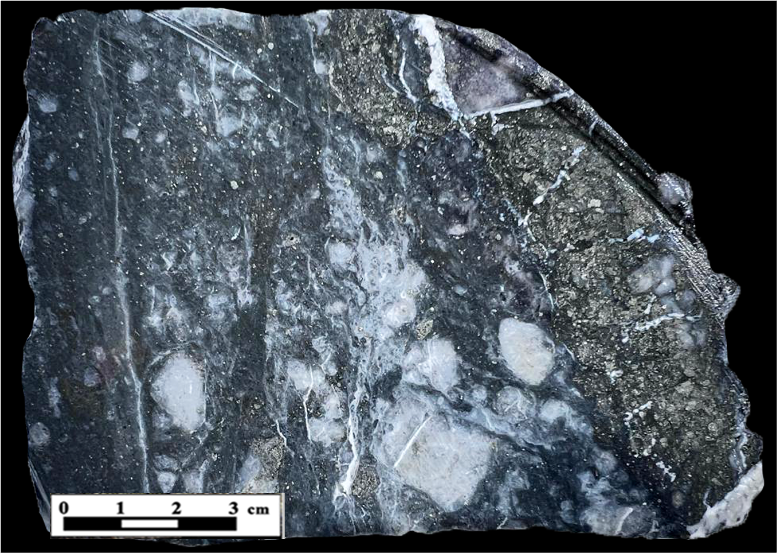
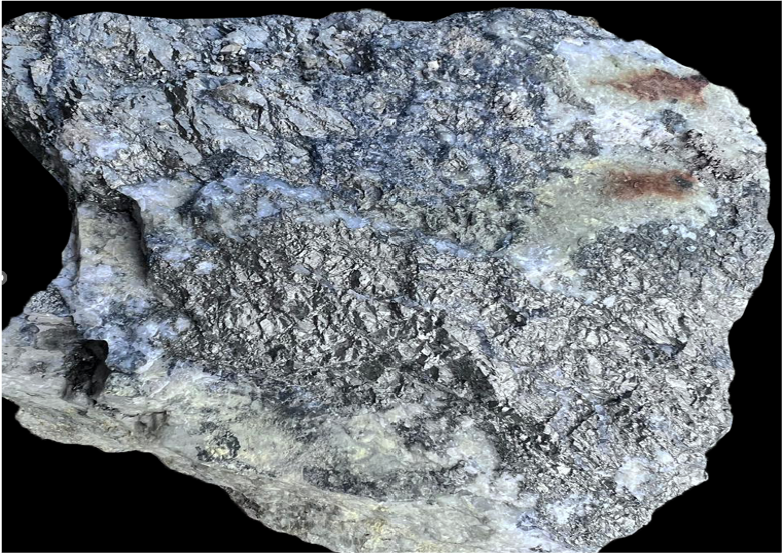
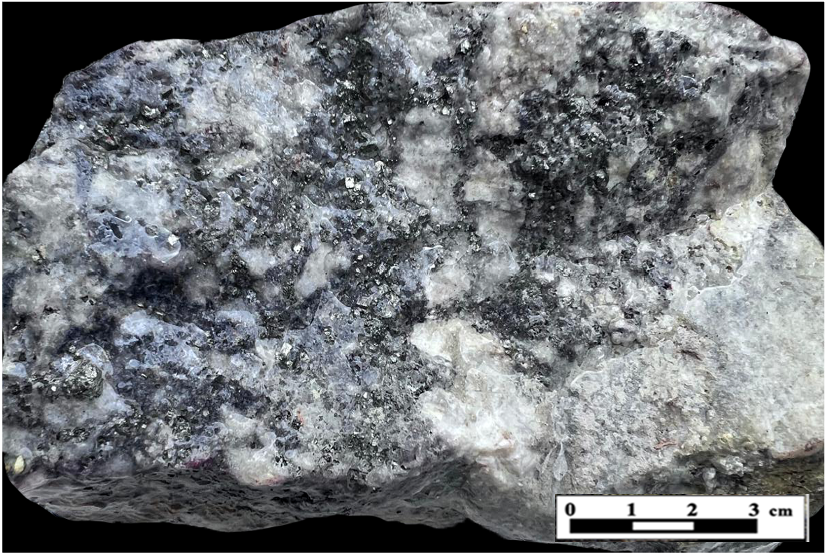
High grade drill hole intersections include sulphide and gold/silver bearing hydrothermal breccias and veins.
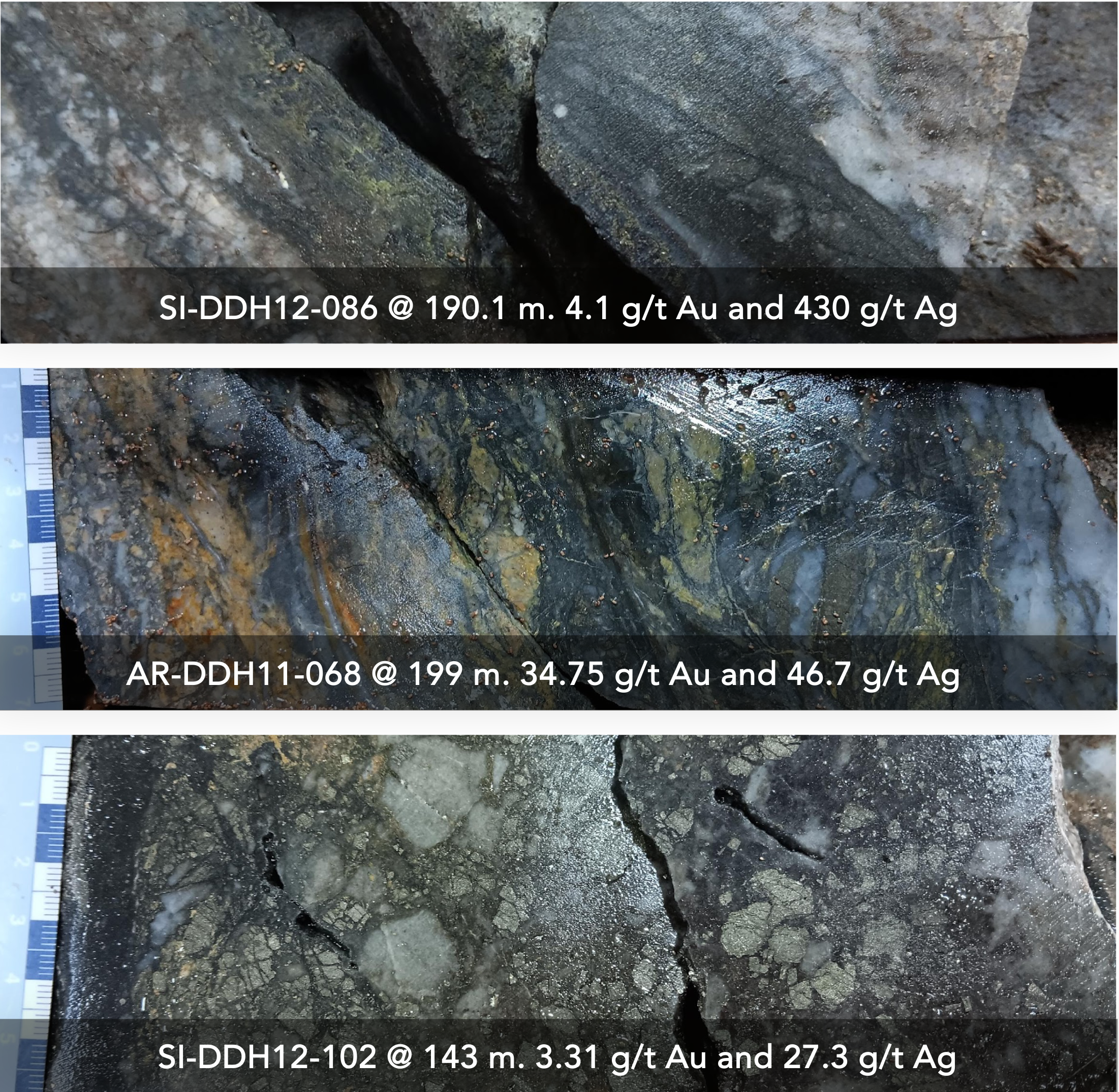
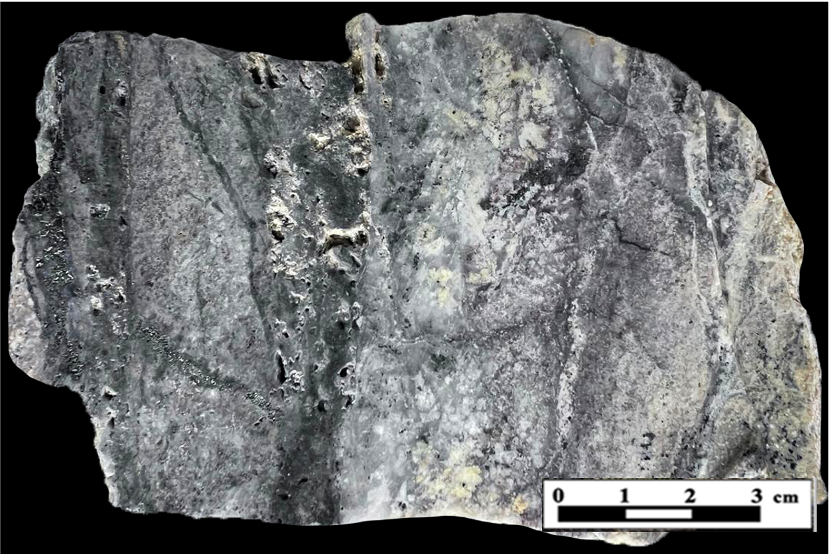
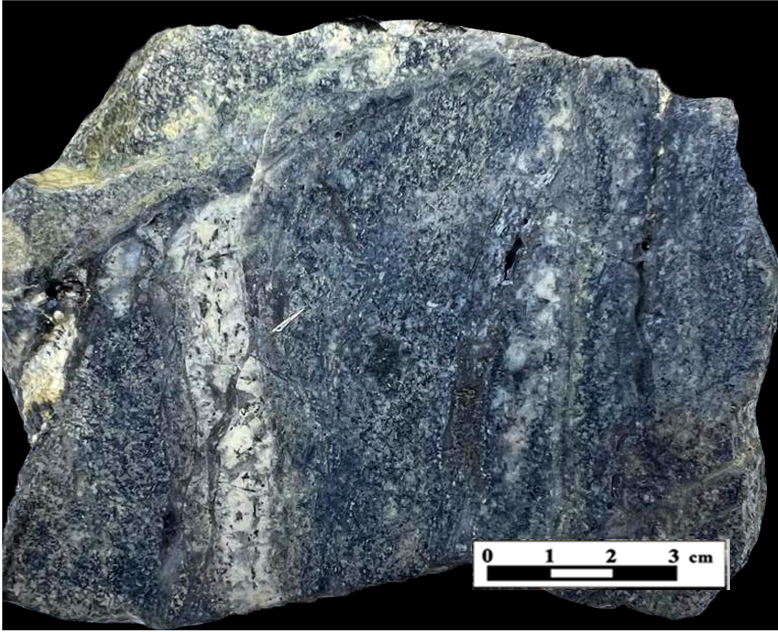
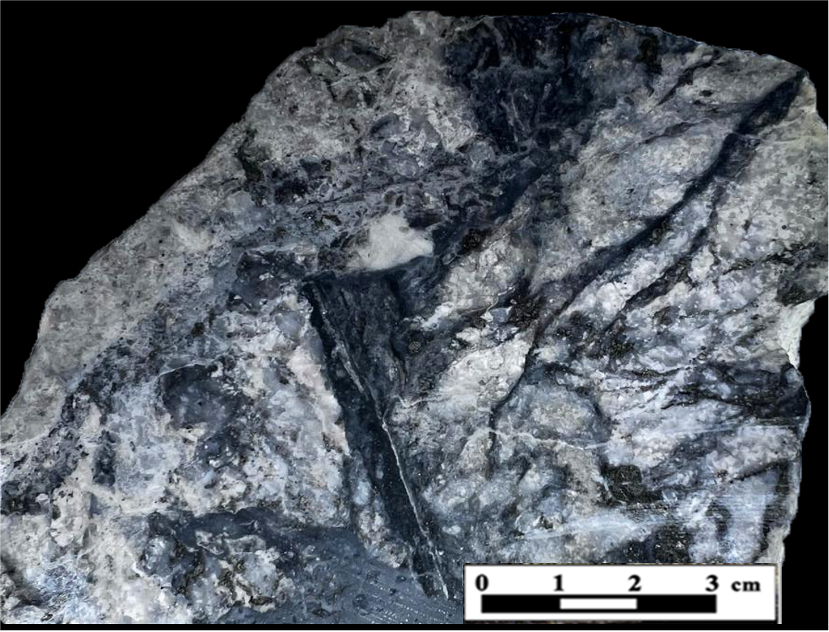
Vetas Project Samples